Am I a candidate?
Told you don't have enough bone? See if you're a candidate for zygomatic implants
Bone in the upper jaw shrinks after teeth are lost, so being told there isn't enough for implants is common, and it is often where our evaluation begins. This guide follows the questions Dr. Torres asks: how much bone is left, which health factors change the plan and what your CT shows. It is not a diagnosis.
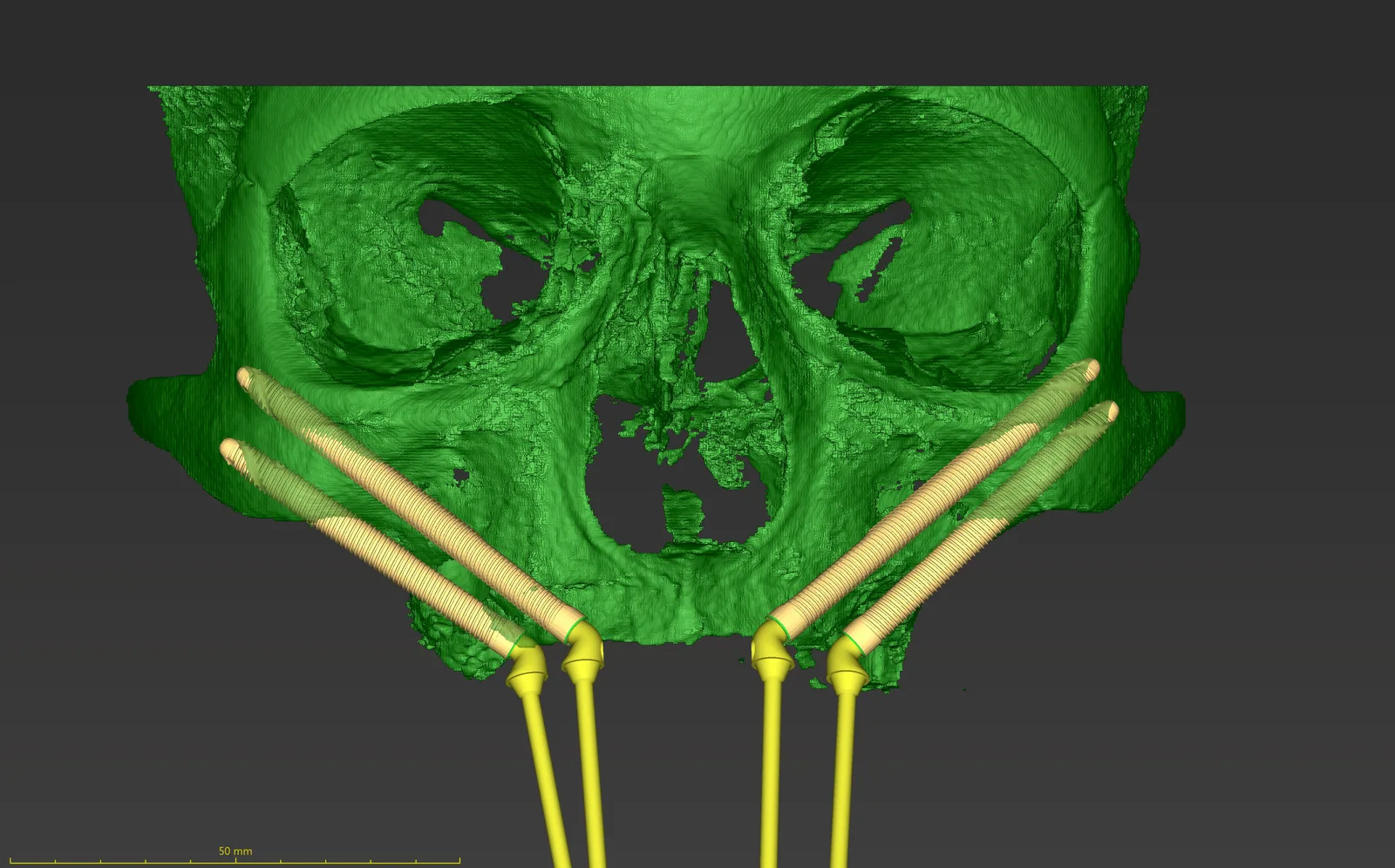
Who zygomatic implants are for
Zygomatic implants are long implants anchored in the cheekbone, used only in the upper jaw. The 2023 ITI consensus indicates them mainly when:
- Upper-jaw bone loss is too advanced for conventional implants without grafting.
- Previous upper-jaw grafts or implants failed.
- You want to avoid staged bone grafting.
- Benign cysts or trauma complicate grafting.
- Part of the upper jaw is missing after tumor surgery, trauma or a birth defect.
If the front has no usable bone either and grafting is not feasible, predictable or preferred, four zygomatic implants (quad zygoma) can be indicated, joined by one bridge.
Where are you on the bone ladder?
We sort cases in four steps. Your step is decided on a CT with objective criteria; the most cited is the Cawood and Howell classification, whose classes IV, V and VI describe the advanced loss where zygomatic implants are considered.
| Step | What it usually means | Options we evaluate |
|---|---|---|
| Enough bone | Room for standard implants where the teeth go | Guided conventional implants, from a single implant to All-on-Four or All-on-Six |
| Moderate loss | Limited height, often under the sinus at the back | Short implants, without a sinus lift |
| Severe loss | Not enough upper-jaw bone for conventional implants without grafts | Zygomatic (cheekbone), pterygoid (behind the upper jaw) or transnasal (front of the upper jaw) implants, often combined |
| Extreme atrophy | None of those anchors can be used | A custom subperiosteal implant: a titanium framework made from your CT |
“No bone” usually means no bone for a standard implant. In borderline cases, a 2026 review recommends also considering less invasive options: short or tilted implants, bone regeneration or a custom subperiosteal implant. So do we.
Health factors that change the plan
Bone is half the question. These conditions don't all rule you out, but each one changes the evaluation.
Smoking
It raises the risk. Across 107 studies, 6.35% of implants failed in smokers versus 3.18% in non-smokers, with more infections and bone loss. We ask you to stop or cut down as much as possible.
Diabetes
One review found no difference in implant failures with diabetes, but more bone loss around the implants. In another, well-controlled type 2 diabetes was not a risk indicator for disease around implants, and its authors recommend checking HbA1c when planning.
Bone medications
With antiresorptives such as bisphosphonates or denosumab, dose matters most: high doses for bone metastases carry a high risk of complications after implant surgery; with osteoporosis doses, reported implant survival is high. Never stop one on your own.
Radiation to the head or neck
Radiotherapy lowers implant survival in people treated for cancer. It is not an automatic no, but it needs a special evaluation of disease control, the radiation received, bone and gum quality, and follow-up visits.
Sinus health
Zygomatic implants pass through or beside the maxillary sinus, so sinus disease is ruled out before surgery and active sinusitis is treated first, with an ENT evaluation if the CT shows findings.
General health and maintenance
You need to be fit for anesthesia or sedation and ready for daily hygiene and check-ups: these implants may need more professional maintenance, and the ITI consensus calls hygiene education paramount.
What your CT scan shows
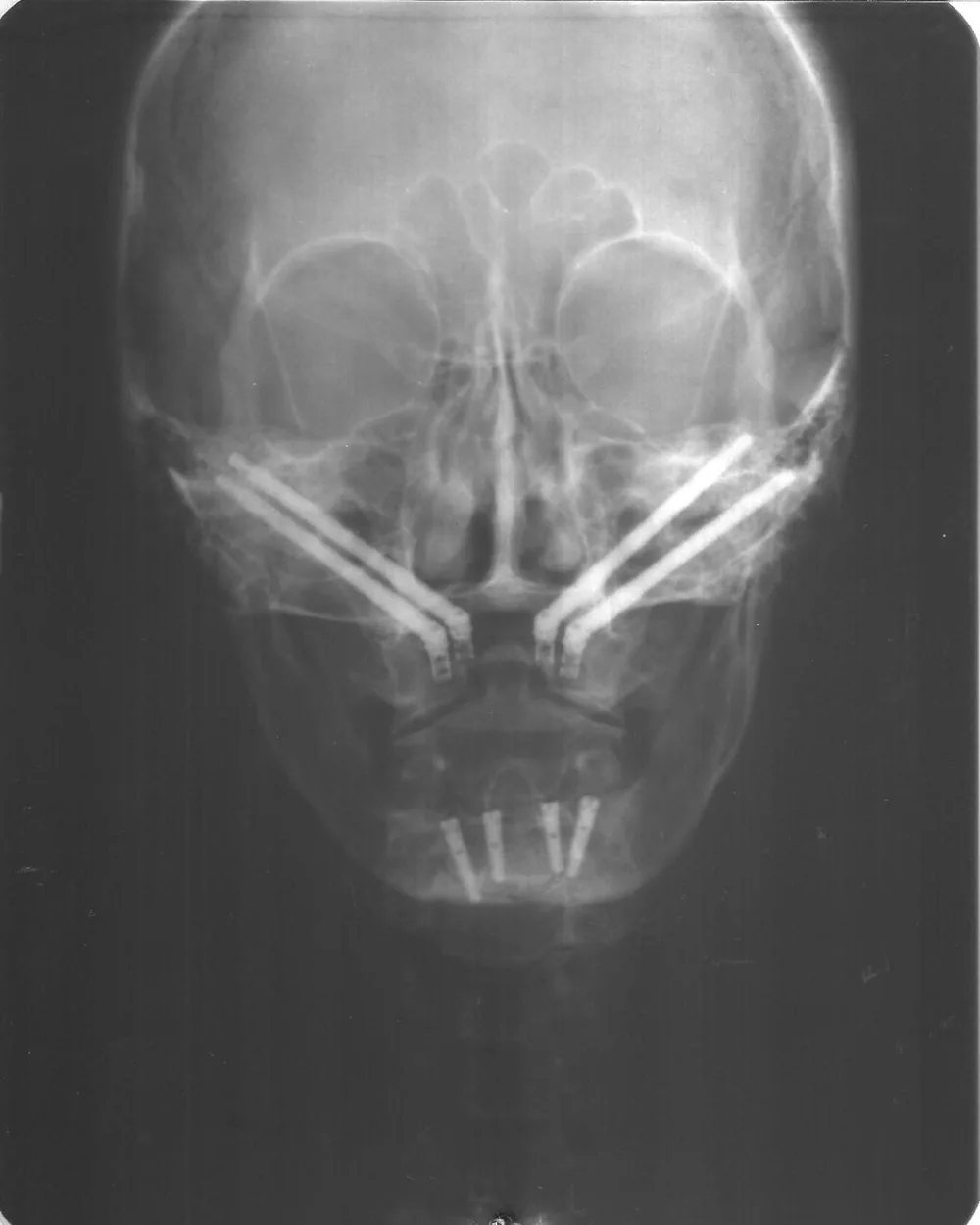
A panoramic X-ray is a good first look, but it is flat: it cannot show bone width or the sinuses in 3D. The American Academy of Oral and Maxillofacial Radiology recommends cross-sectional imaging for every implant site, with cone beam CT (CBCT) as the method of choice, and the ITI consensus asks for a CT that includes the midface before zygomatic implants. On it, Dr. Torres checks:
- Bone height and width in the back, middle and front of the upper jaw.
- The bone volume of the cheekbones, where zygomatic implants anchor.
- Your sinuses, to rule out disease before surgery.
- Whether the front of the jaw can hold conventional implants, or four zygomatic implants are needed.
- Nearby nerves, the nasal floor and the eye socket, to plan a safe path for each implant.
Quick self-check (not a diagnosis)
If several of these describe you, an evaluation is worth it:
- You wear a full upper denture, or are losing your last upper teeth, and want fixed teeth.
- You were told there isn't enough bone for implants, or that you need a graft or sinus lift first.
- Implants or a bone graft in your upper jaw failed.
- You would rather avoid months of staged grafting.
- Part of your upper jaw was lost to surgery, trauma or a birth defect.
Tell us up front if any of these apply; they change the evaluation:
- You smoke.
- You have diabetes (send your latest HbA1c if you have it).
- You take, or took, bisphosphonates, denosumab or other bone medications.
- You had radiation to the head or neck.
- You have sinus problems or had sinus surgery.
- You take blood thinners.
This checklist cannot tell you whether you are a candidate; only an exam and a CT can. If you have pain, swelling, fever, bleeding that won't stop or a change in your vision, contact our office or go to an emergency service now.
What to send for a remote review
- 01
Your CT scan, as DICOM files
The full file set from the imaging center (not screenshots or only the report), covering the upper jaw, sinuses and cheekbones. These files are usually too large for a chat message: tell us you have one and we'll explain how to share it.
- 02
Or a panoramic X-ray
Enough for a first look; a CT will still be needed before any plan.
- 03
Photos
Front smile, profile and bite, with and without your denture.
- 04
Your medical history
Conditions, medications and doses (especially bone medications and blood thinners), smoking, radiation and sinus history.
- 05
Your dental history
Previous implants or grafts and when they were placed, the implant brand if known, and any dental reports you have.
- 06
Your goals
Fixed or removable teeth, one jaw or both, and when you could travel to Costa Rica.
A remote review shows whether an in-person evaluation is worth the trip and which options may be on the table. It does not replace the exam: Dr. Torres confirms the plan only in person.
Your next step: a consultation
Book a consultation at our office in Tower 1 of Hospital CIMA, Escazú, or by video call. Dr. Torres explains your options, including alternatives, risks and total treatment time, and gives you an exact quote once he has evaluated your CT.
Every surgery at our practice is led by Dr. Ronald Torres Labardini, an oral and maxillofacial surgeon certified by the Mexican Board of Oral and Maxillofacial Surgery. He completed his specialty at UNAM (Mexico) in 2013, has taught at the University of Costa Rica School of Dentistry since 2006, is a member of the IAOMS and has been with the AO Foundation since 2012.
Patients rate his surgical practice 5.0 across 104 reviews on HuliHealth (2019–2026); the reviews cover his practice in general, not implants specifically. One patient wrote in November 2022: “Very detailed and thorough explanation of the case and alternatives so you can take the best informed decision”.
FAQ
I was told I need a bone graft or sinus lift first. Could zygomatic implants work instead?
Possibly: avoiding staged grafting is an ITI indication. The latest Cochrane review, based for this comparison on one randomized trial, concludes that zygomatic implants probably have fewer implant failures than implants in grafted bone, but probably more complications. In that trial, functional fixed teeth came after 1.34 days on average, versus 444.32 days with grafting. A graft is still right for some people.
My implants or bone graft failed. Am I still a candidate?
It may still be possible: failed grafts or implants are one of the main indications in the ITI consensus. We need a new CT and, if you have them, the records of what was placed.
Can zygomatic implants be placed in the lower jaw?
No. They anchor in the cheekbone, so they are only for the upper jaw. A lower jaw without enough bone is evaluated separately on the CT.
Is there an age limit?
Age alone does not decide it. Your general health, fitness for anesthesia or sedation, the bone on your CT and your ability to keep up hygiene and check-ups do.
I take medication for osteoporosis. Should I stop it before surgery?
Don't stop it on your own. For osteoporosis doses, an international task force suggests antiresorptives need not be stopped before implant surgery (a weak recommendation based on very low-quality evidence), and jaw osteonecrosis after implants was reported in 0.5% of exposed patients. Tell us the drug, dose and duration; we coordinate with your prescribing doctor.
My CT is a few years old, or I only have a panoramic X-ray. Is that enough?
It is enough to start. Bone changes after tooth loss or a failed implant, so before planning surgery Dr. Torres may ask for a new CT that includes the midface and sinuses, as the ITI consensus recommends.
Sources
- 1.Al-Nawas B et al. — ITI consensus report on zygomatic implants: indications, evaluation of surgical techniques and long-term treatment outcomes. Int J Implant Dent, 2023.
- 2.Acerra A et al. — Zygomatic implants for rehabilitation of the atrophic maxilla: clinical indications, outcomes, complications, and evidence gaps — a comprehensive review. Medicina (Kaunas), 2026.
- 3.Visconti RF et al. — Interventions for replacing missing teeth: zygomatic implants for the rehabilitation of the severely atrophic edentulous maxilla. Cochrane Database Syst Rev, 2026.
- 4.Davó R et al. — Immediately loaded zygomatic implants vs conventional dental implants in augmented atrophic maxillae: 1-year post-loading results from a multicentre randomised controlled trial. Eur J Oral Implantol, 2018.
- 5.Chrcanovic BR et al. — Smoking and dental implants: a systematic review and meta-analysis. J Dent, 2015.
- 6.Moraschini V et al. — The impact of diabetes on dental implant failure: a systematic review and meta-analysis. Int J Oral Maxillofac Surg, 2016.
- 7.Bencze B et al. — Prediabetes and poorly controlled type-2 diabetes as risk indicators for peri-implant diseases: a systematic review and meta-analysis. J Dent, 2024.
- 8.Schimmel M et al. — Effect of advanced age and/or systemic medical conditions on dental implant survival: a systematic review and meta-analysis. Clin Oral Implants Res, 2018.
- 9.Ali DS et al. — Antiresorptive therapy to reduce fracture risk and effects on dental implant outcomes in patients with osteoporosis: a systematic review and Osteonecrosis of the Jaw Taskforce consensus statement. Endocr Pract, 2025.
- 10.Mirza R et al. — Dental implant failure and medication-related osteonecrosis of the jaw related to dental implants in patients taking antiresorptive therapy for osteoporosis: a systematic review and meta-analysis. Endocr Pract, 2025.
- 11.Tyndall DA et al. — Position statement of the American Academy of Oral and Maxillofacial Radiology on selection criteria for the use of radiology in dental implantology with emphasis on cone beam computed tomography. Oral Surg Oral Med Oral Pathol Oral Radiol, 2012.
Schedule your consultation
Take the first step to your perfect smile today
We are here to answer your questions and guide you through the process.